
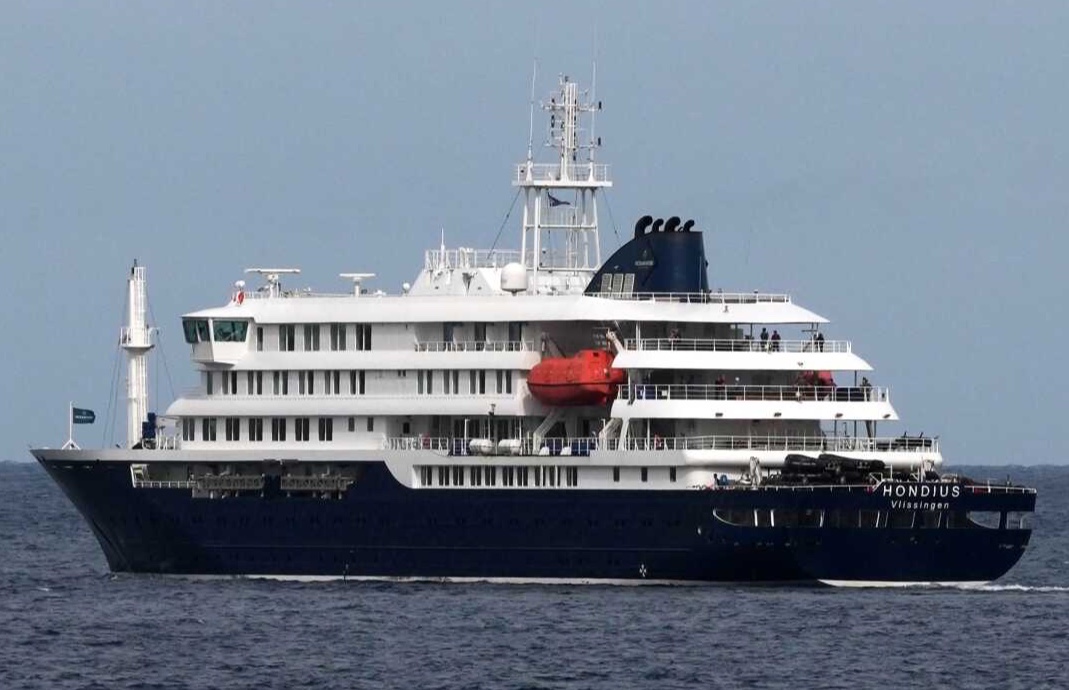

U.S. Naval Forces Central Command (NAVCENT) has officially integrated the Dutch-flagged expedition vessel MV Hondius into the 5th Fleet to serve as a primary mine countermeasures asset. The ship, originally designed for Arctic tourism, will begin leading commercial convoys through the Strait of Hormuz effective immediately.
Naval officials stated that the civilian vessel offers several technical specifications that are currently unavailable in the standard U.S. fleet.
Structural Suitability
According to a NAVCENT engineering report, the Hondius possesses a Polar Class 6 ice-strengthened hull, which naval architects have determined is over-engineered for the warm waters of the Middle East.
“Traditional minesweepers use wooden or fiberglass hulls to avoid magnetic triggers,” a spokesperson said. “However, the Hondius utilizes a high-density steel architecture designed to crush multi-ton ice floes. We believe the hull’s ability to withstand external pressure makes it an ideal ‘physical contact’ detection tool. If a mine is present, the Hondius is structurally predisposed to find it through direct kinetic feedback.”
Visual Observation Capacity
The Navy also cited the ship’s current occupancy as a significant intelligence-gathering asset. The vessel is presently carrying 147 individuals who are confined to their cabins.
Continuous Perimeter Monitoring: With nearly 150 sets of eyes distributed across multiple deck levels, the ship provides 360-degree visual coverage of the water’s surface.
Acoustic Transparency: Because the ship is a civilian cruise vessel, it lacks the signature engine hum of a destroyer, theoretically allowing it to “sneak up” on pressure-sensitive explosives.
Operational Longevity: Due to the ship’s current “no-port” status, the Navy noted that the Hondius can remain at sea indefinitely without the logistical burden of shore leave or harbor fees.
Secondary Logistical Considerations
During the final commissioning phase, Naval medical officers noted that the ship is currently under a strict quarantine due to an internal outbreak of the Andes strain of Hantavirus. Officials described the viral presence as a “primary secondary benefit” that the Navy had not initially factored into the acquisition.
“The presence of a highly contagious respiratory pathogen among the current manifest ensures that no unauthorized boarding parties will attempt to seize the vessel,” the briefing stated. “It essentially creates a self-maintaining security perimeter. Furthermore, the mandatory isolation of the passengers simplifies our chain of command, as the personnel are already accustomed to following strict, room-bound directives without questioning mission objectives.”
The Navy confirmed that no military sailors will board the vessel, as the existing crew and passengers are sufficient for their, and the ship’s, remaining operational lifespan.